The velvet-sofa living room.
Light & Discovery

Proteins of Life · For interior designers
Aster & Sorrel turns real molecular protein structures into art for everyone. Discover unexpected forms and remarkable stories, with framing that gives them presence.
Stories worth discovering
A firefly’s glow. A discovery that changed the world. The structures behind a heartbeat. Let a client fall for the art and discover its story.
The wonder of things that glow.
Discover the worksThe collectionDiscoveries, collected over time.
Discover the worksThe collectionA collection with a heartbeat.
Discover the worksThe collectionThe forms behind growth and renewal.
Discover the worksSix ways to imagine the collection
From a velvet-sofa living room to a bright breakfast nook and a garden-facing family room. Explore a setting, then shop the pieces shown.
Light & Discovery
Nobel Discoveries
Rhythm of Life
Morning discoveries
Life in Balance
Nobel Discoveries
Interior visualizations featuring collection artwork. Room scale is approximate.
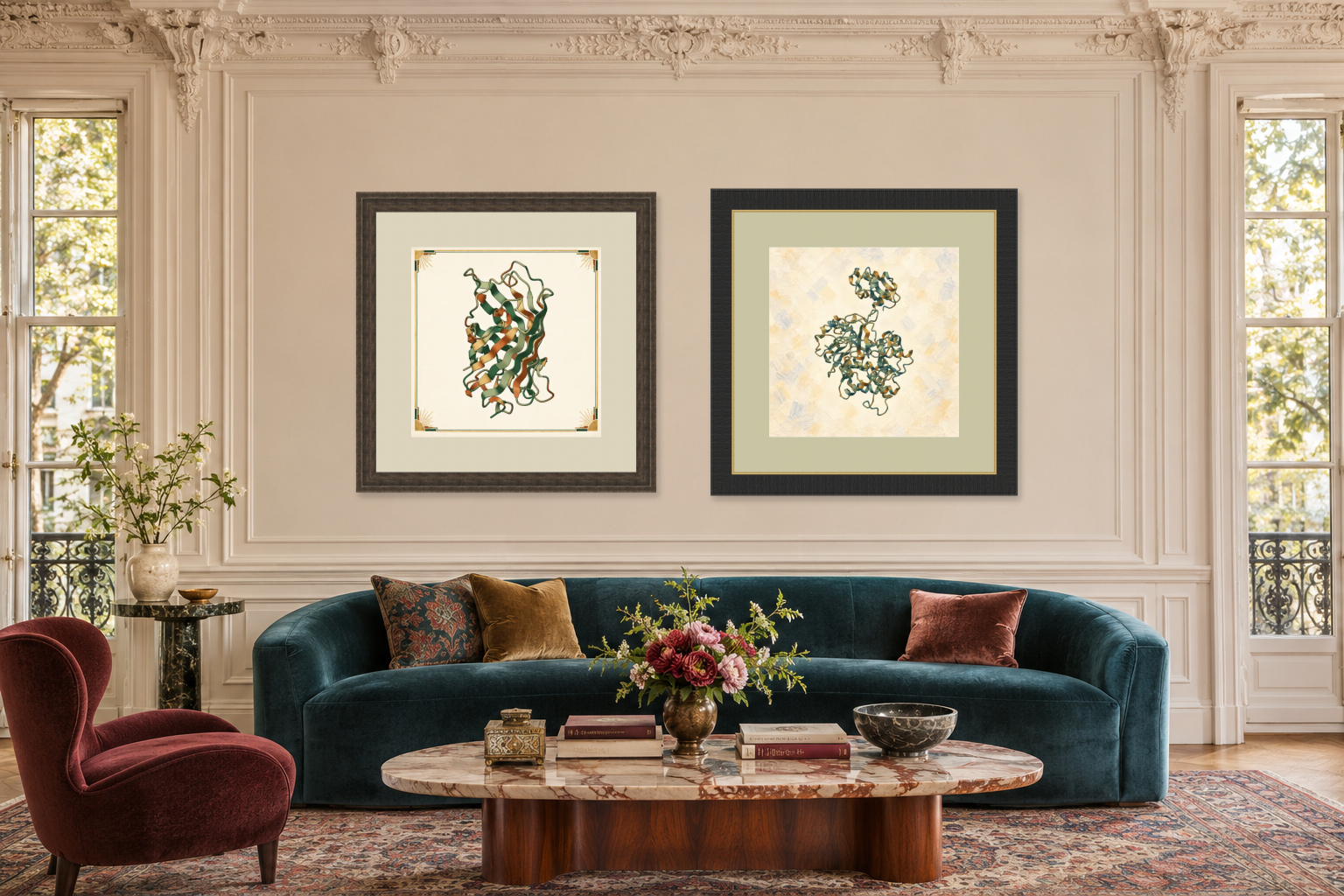
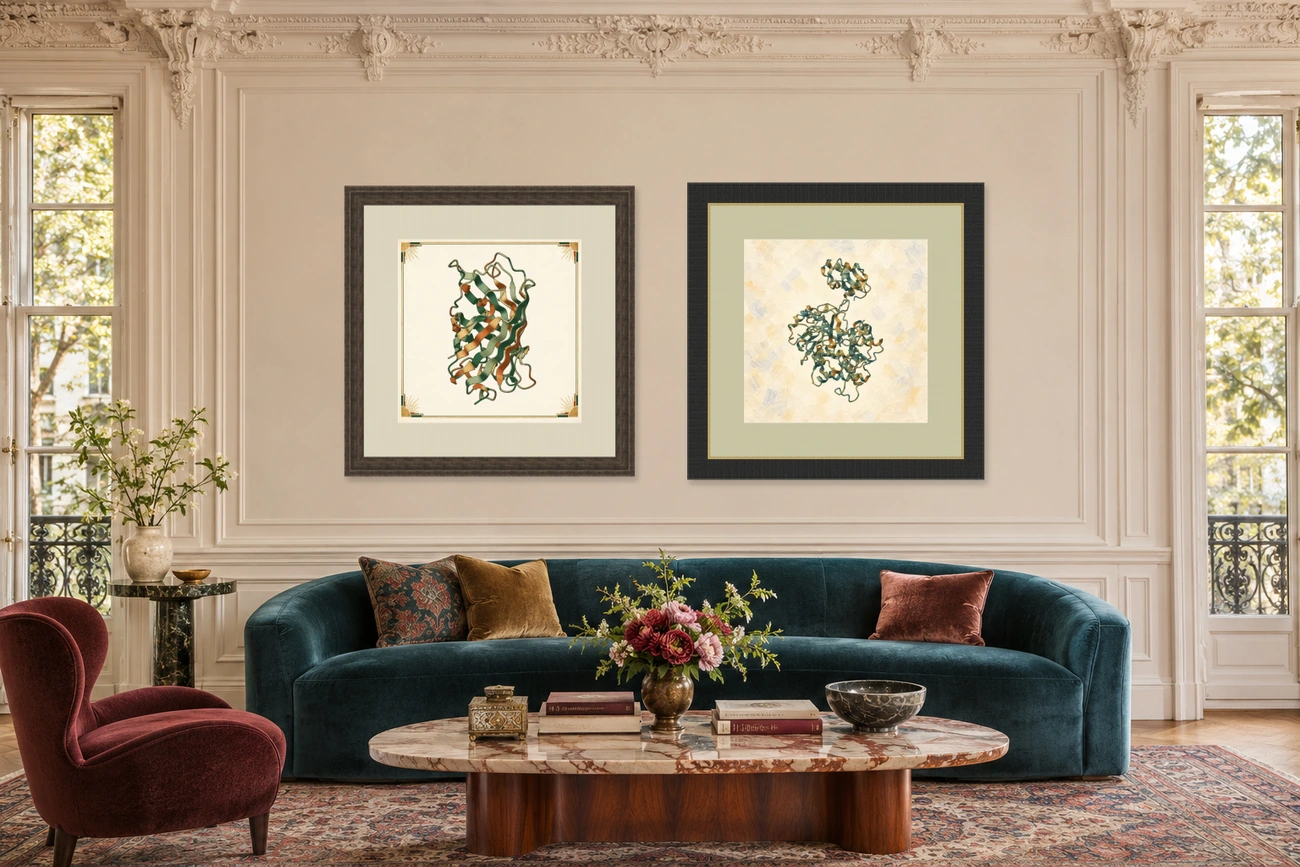
The velvet-sofa living room
Green fluorescent protein and firefly luciferase, in two complementary artistic interpretations. Muted green, blue and ochre connect the art with the velvet and the rug.
Gilded Grove + Painted Light · Large
Green fluorescent protein · Gilded Grove · Large
Firefly luciferase · Painted Light · Large
View room largerInterior visualization. Scale is approximate.
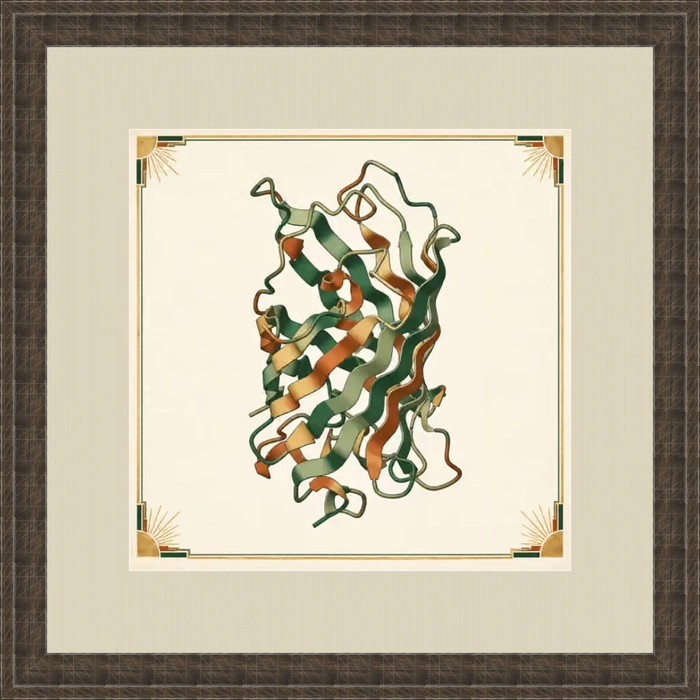
Gilded Grove
Espresso Gold solid-wood frame · Pearl mat · Large 24 × 24 in artwork
The green and cream palette echoes the upholstery, with an espresso frame that relates to the walnut.
The story behind the art
This jellyfish protein glows green when illuminated with blue light. Researchers use it as a tiny beacon, attaching it to other proteins to watch where they move inside living cells. Its discovery and development earned the 2008 Nobel Prize in Chemistry.
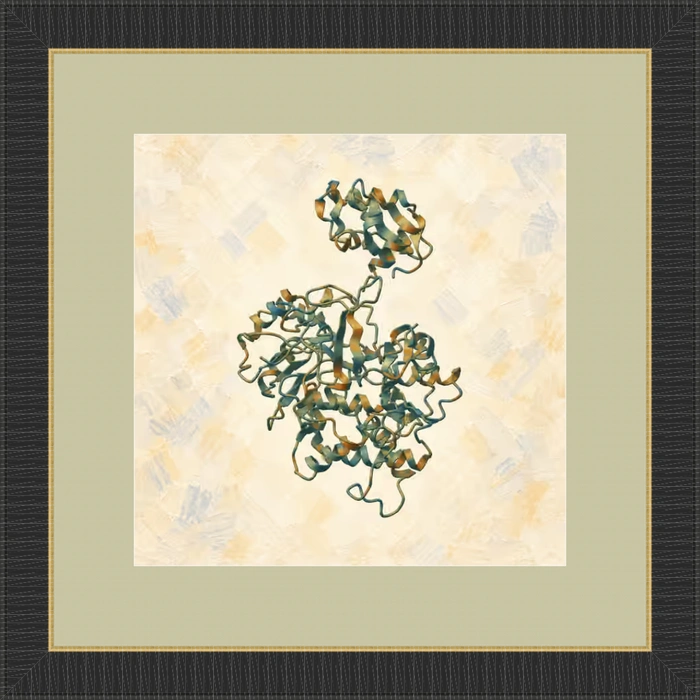
Painted Light
Black with Gold solid-wood frame · Sauterne mat · Large 24 × 24 in artwork
Two distinct lobes contrast with GFP’s barrel, while soft blue and ochre pick up the room’s textiles.
The story behind the art
Luciferase is the enzyme that makes a firefly flash, using a small molecule called luciferin, oxygen and cellular energy to produce light. Scientists borrow the same reaction to reveal when a gene switches on or to track cells in an experiment.
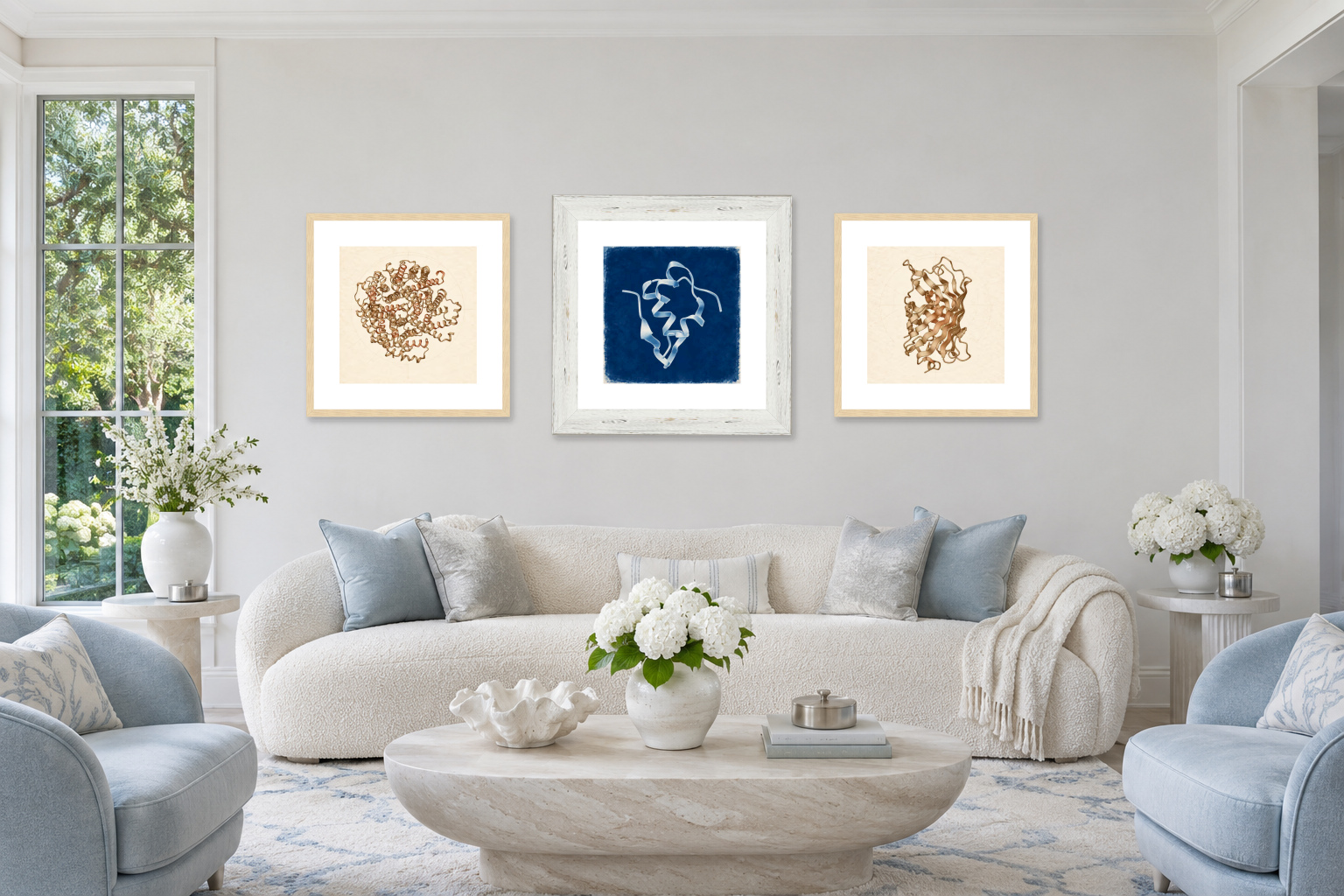
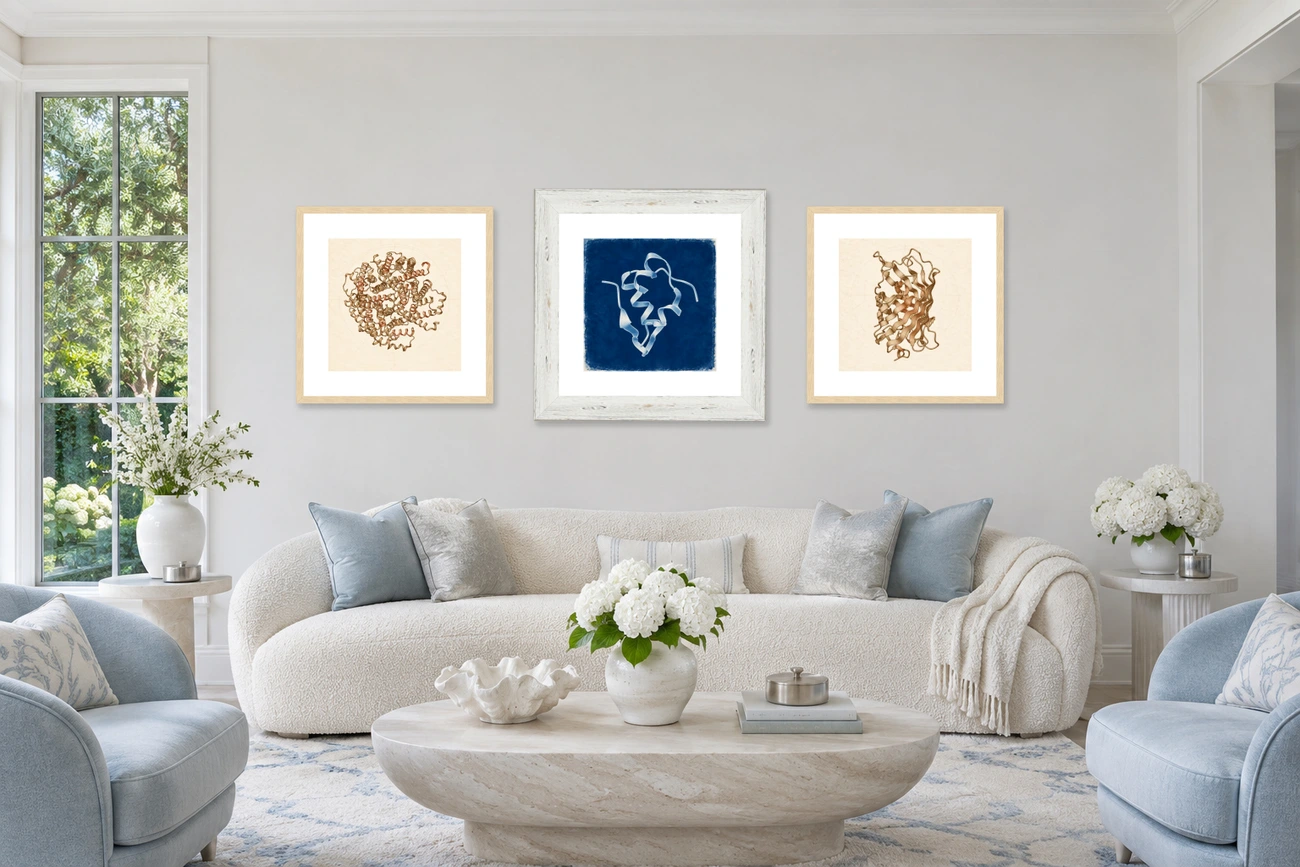
The white contemporary room
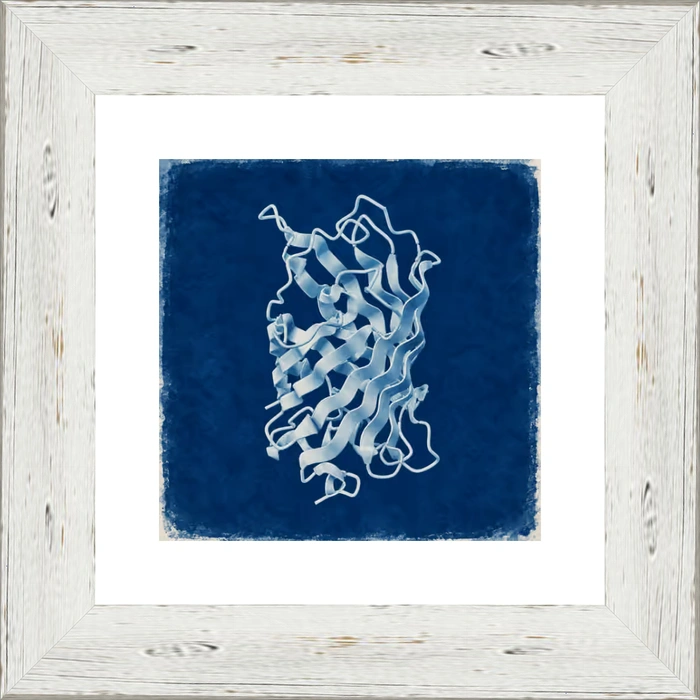
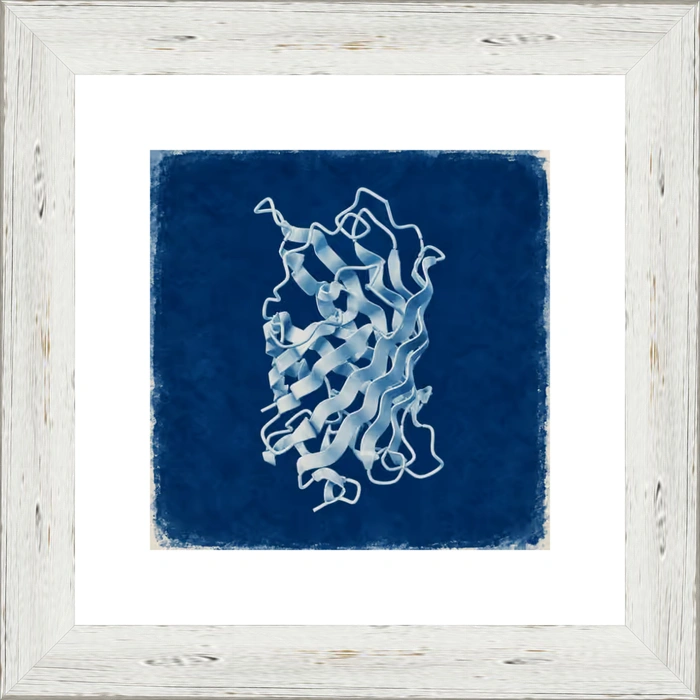
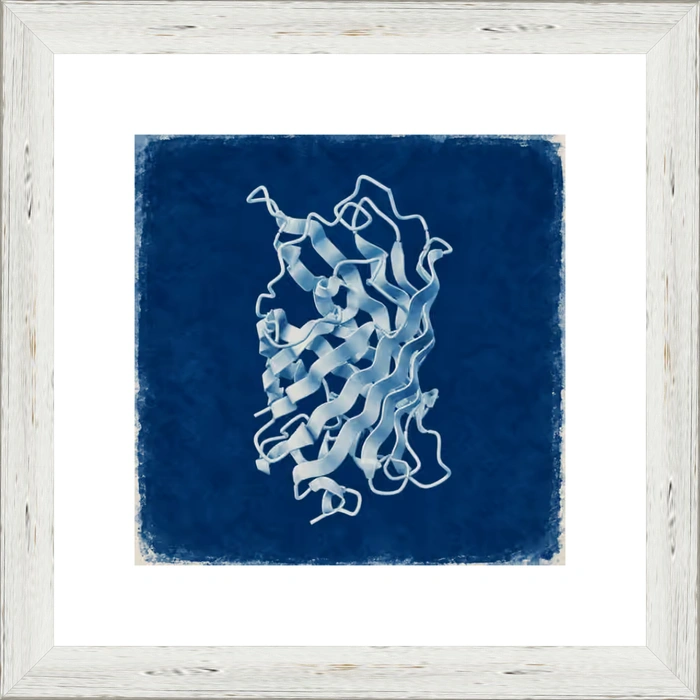
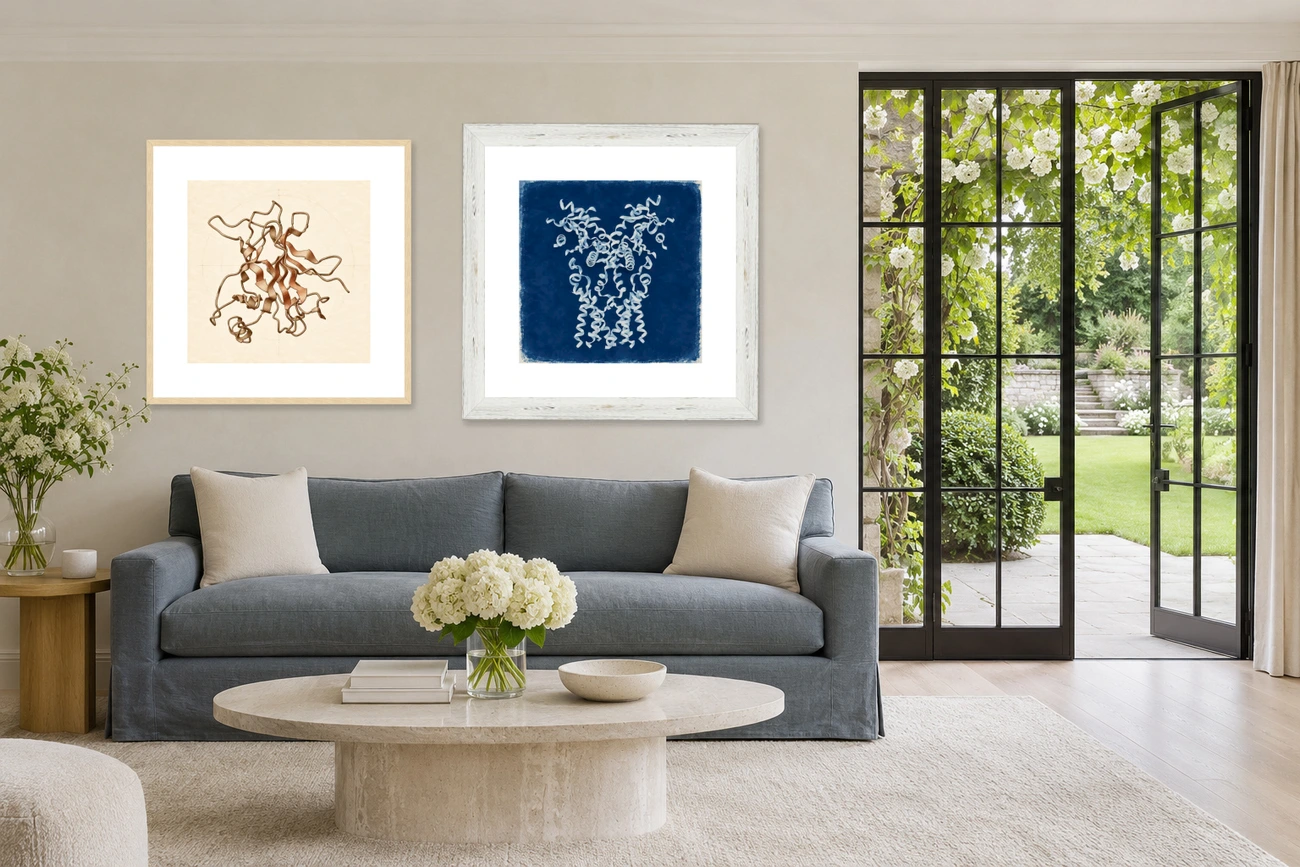
A blue insulin study sits between aquaporin and green fluorescent protein in pale maple frames. The wider white frame becomes the center of a balanced three-piece group, with three distinct molecular forms.
Anatomical Study + Prussian Blue · Medium
Aquaporin 1 · Anatomical Study · Medium
Insulin · Prussian Blue · Medium
Green fluorescent protein · Anatomical Study · Medium
View room largerInterior visualization. Scale is approximate.
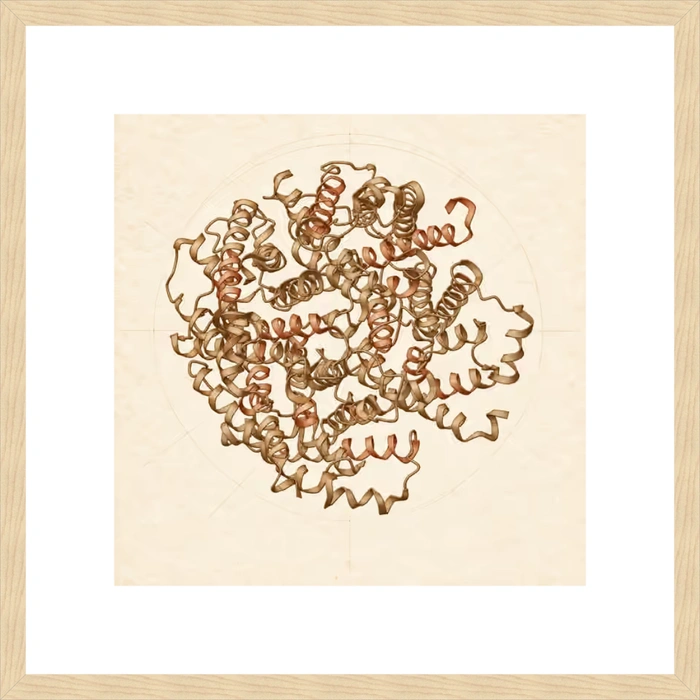
Anatomical Study
Maple wood solid-wood frame · White mat · Medium 16 × 16 in artwork
A round, intricate structure opens the group in a slender maple frame.
The story behind the art
Aquaporin 1 is a water passage through a cell's outer membrane, letting water move rapidly while keeping many other molecules out. Peter Agre's discovery of water channels solved a longstanding biological puzzle and earned him a share of the 2003 Nobel Prize in Chemistry.
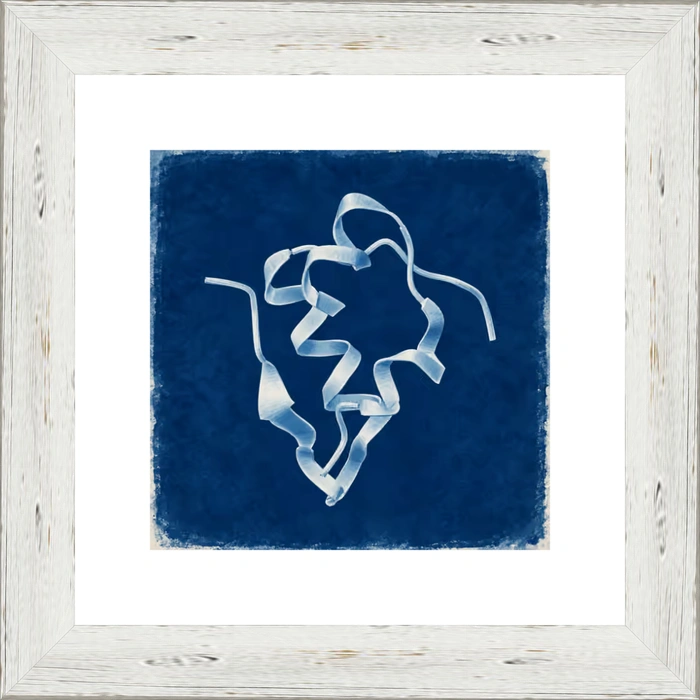
Prussian Blue
White solid-wood frame · White mat · Medium 16 × 16 in artwork
A spare ribbon form and wider white frame create the central blue focal point.
The story behind the art
Insulin is a hormone that tells cells to take sugar from the bloodstream and use or store it. Its discovery made lifesaving treatment possible for people with type 1 diabetes and earned the 1923 Nobel Prize in Physiology or Medicine.
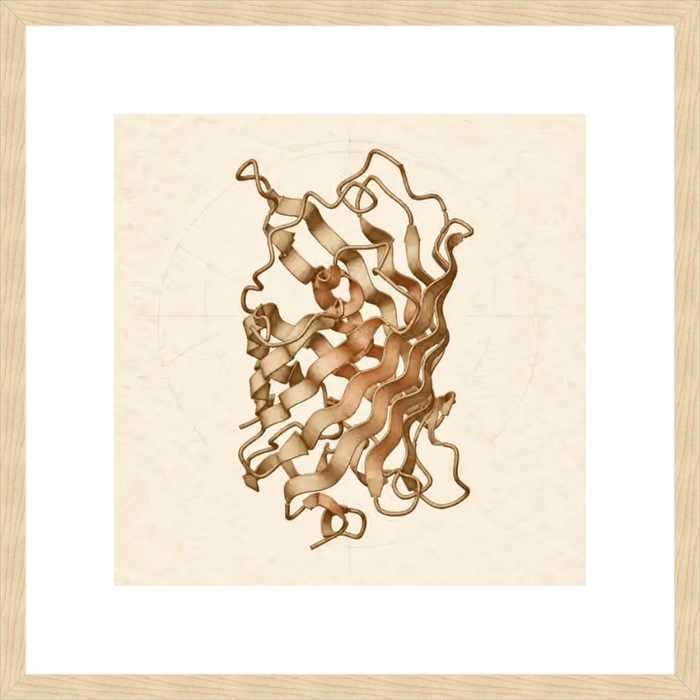
Anatomical Study
Maple wood solid-wood frame · White mat · Medium 16 × 16 in artwork
A vertical barrel balances aquaporin’s round form, with the same pale maple frame.
The story behind the art
This jellyfish protein glows green when illuminated with blue light. Researchers use it as a tiny beacon, attaching it to other proteins to watch where they move inside living cells. Its discovery and development earned the 2008 Nobel Prize in Chemistry.
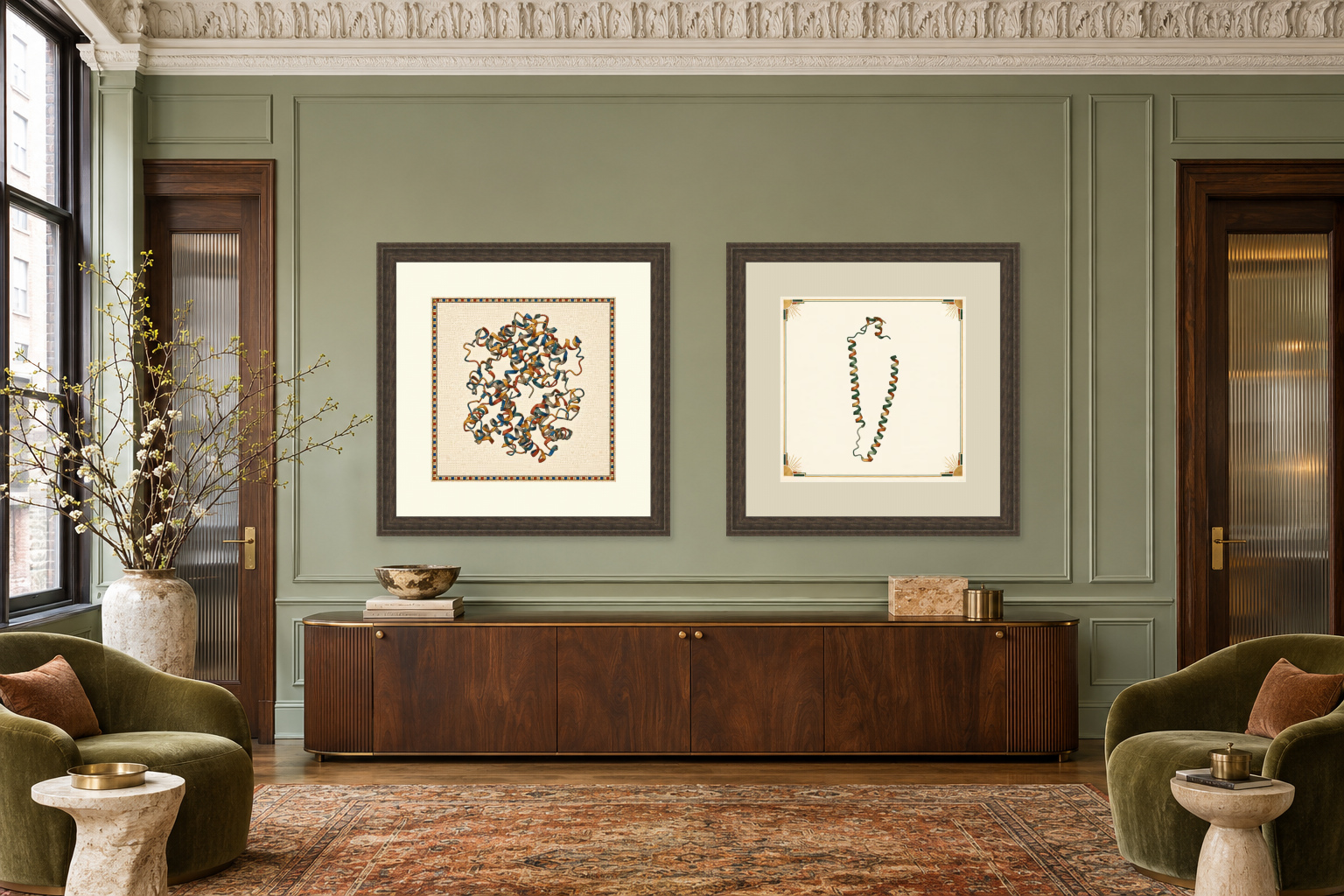
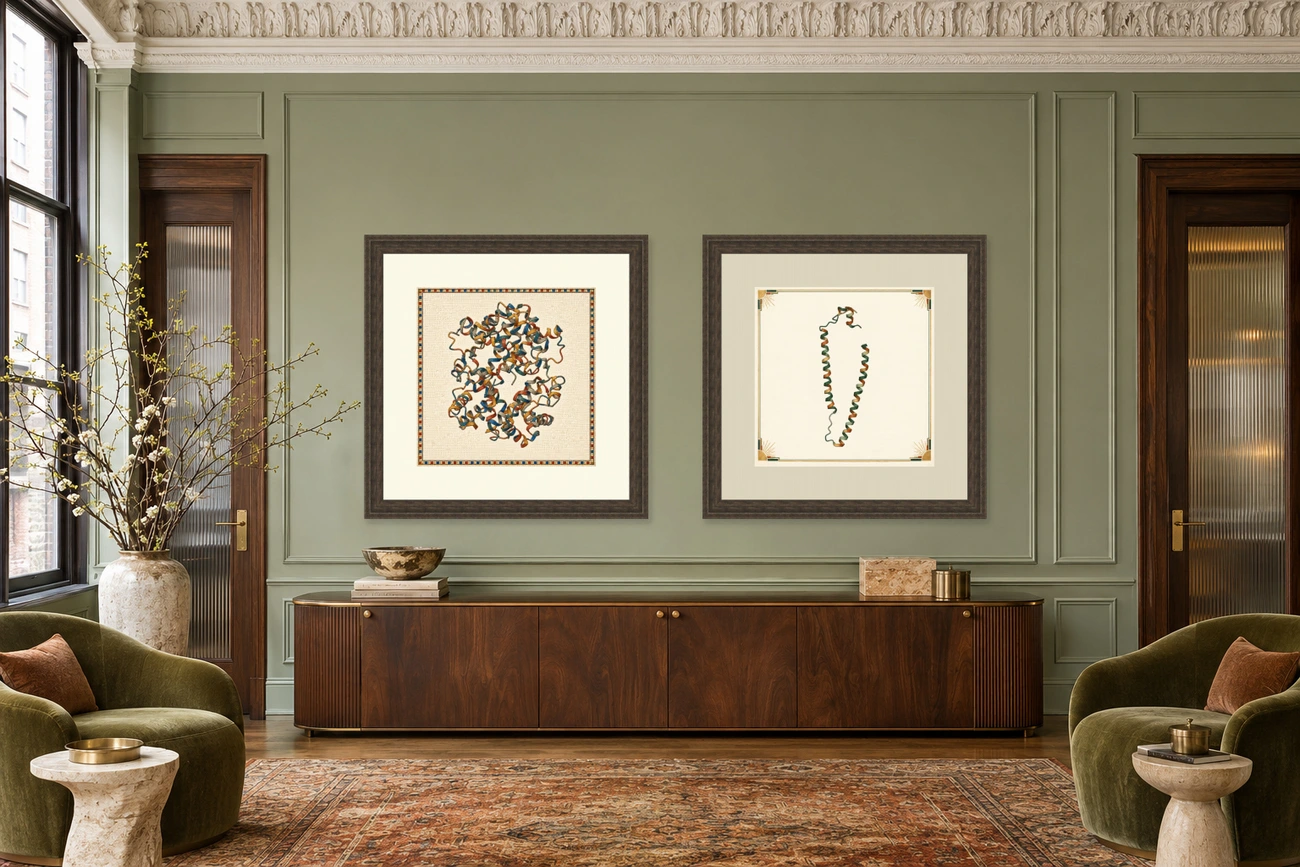
The green-wall reception
Hemoglobin and cardiac troponin I connect oxygen transport with the heartbeat. Tessera’s intricate form sits beside the open, elongated structure of Gilded Grove.
Tessera + Gilded Grove · Large
Hemoglobin · Tessera · Large
Cardiac troponin I · Gilded Grove · Large
View room largerInterior visualization. Scale is approximate.
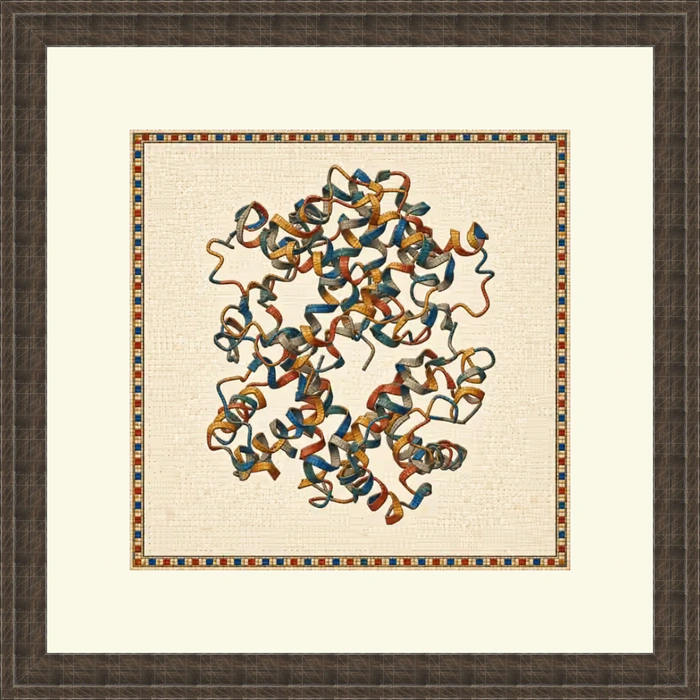
Tessera
Espresso Gold solid-wood frame · Off-White mat · Large 24 × 24 in artwork
Mosaic detail brings green and ochre into the room without competing with the wall.
The story behind the art
Hemoglobin is the oxygen carrier packed into red blood cells. It picks up oxygen in the lungs and delivers it around the body with every heartbeat. Max Perutz's work revealing its three-dimensional structure earned him a share of the 1962 Nobel Prize in Chemistry.
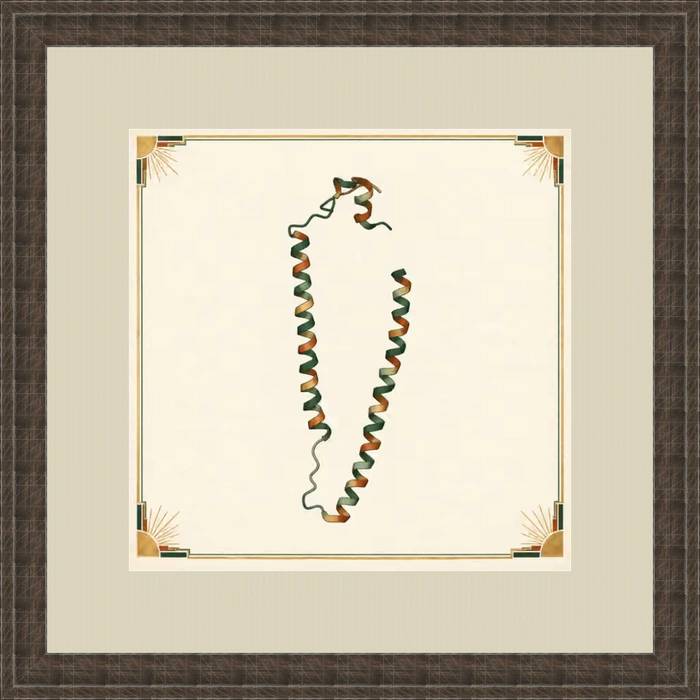
Gilded Grove
Espresso Gold solid-wood frame · Pearl mat · Large 24 × 24 in artwork
An open, linear silhouette provides breathing room beside the denser hemoglobin composition.
The story behind the art
Cardiac troponin I is part of the switch that lets heart muscle contract and relax with every beat. When heart muscle cells are injured, some troponin can enter the blood, which is why doctors measure it when evaluating a possible heart attack.
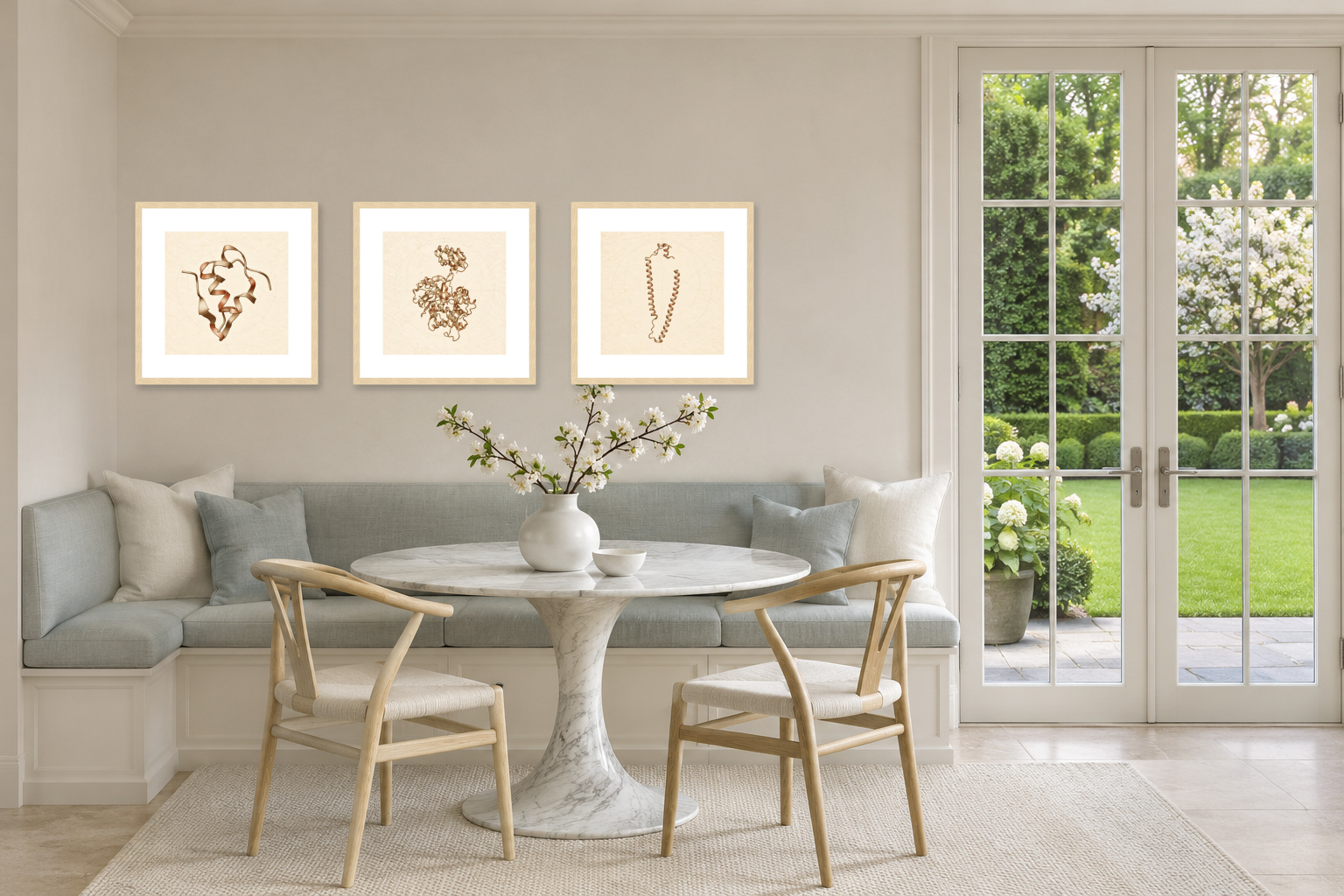
The breakfast nook
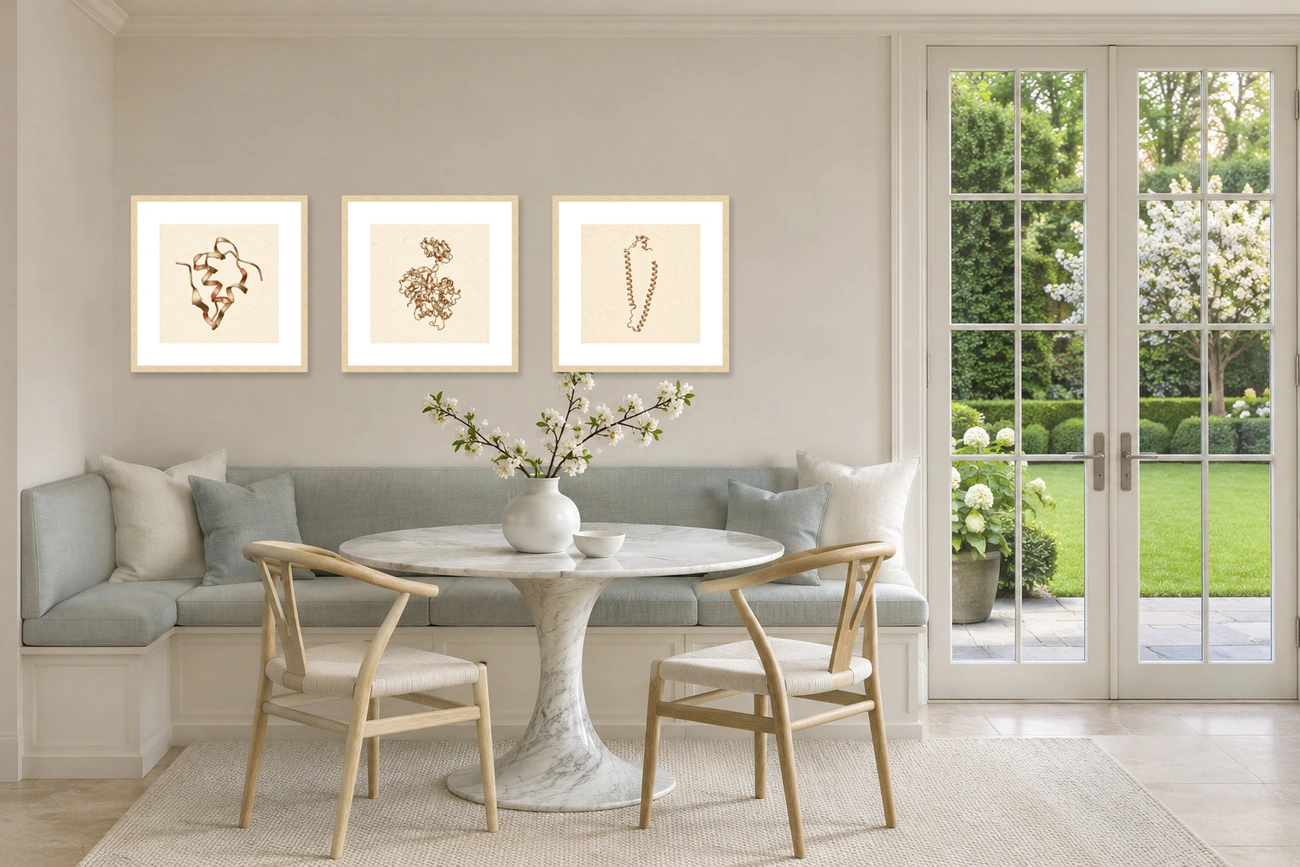
Insulin’s open ribbons, the two-part shape of firefly luciferase and the slender form of cardiac troponin I share a soft parchment palette. Three slim maple frames connect with the chairs and leave room for the garden.
Anatomical Study · Medium
Insulin · Anatomical Study · Medium
Firefly luciferase · Anatomical Study · Medium
Cardiac troponin I · Anatomical Study · Medium
View room largerInterior visualization. Scale is approximate.
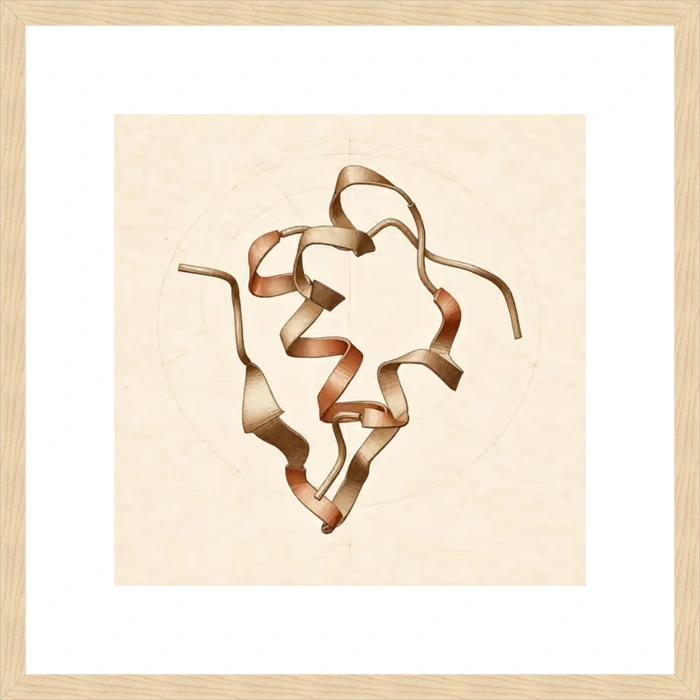
Anatomical Study
Maple wood solid-wood frame · White mat · Medium 16 × 16 in artwork
A simple silhouette and pale maple frame begin the quiet three-piece grouping.
The story behind the art
Insulin is a hormone that tells cells to take sugar from the bloodstream and use or store it. Its discovery made lifesaving treatment possible for people with type 1 diabetes and earned the 1923 Nobel Prize in Physiology or Medicine.
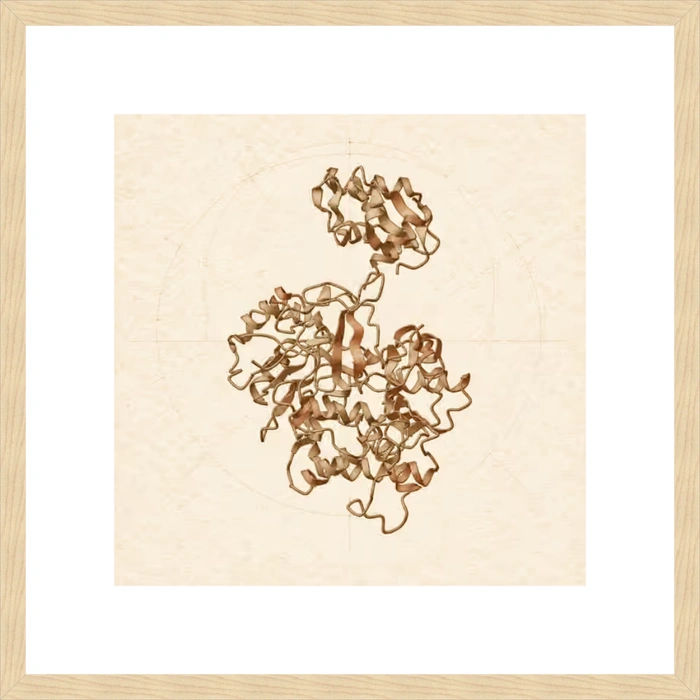
Anatomical Study
Maple wood solid-wood frame · White mat · Medium 16 × 16 in artwork
Its two-lobed structure forms a more intricate center in the same restrained palette.
The story behind the art
Luciferase is the enzyme that makes a firefly flash, using a small molecule called luciferin, oxygen and cellular energy to produce light. Scientists borrow the same reaction to reveal when a gene switches on or to track cells in an experiment.
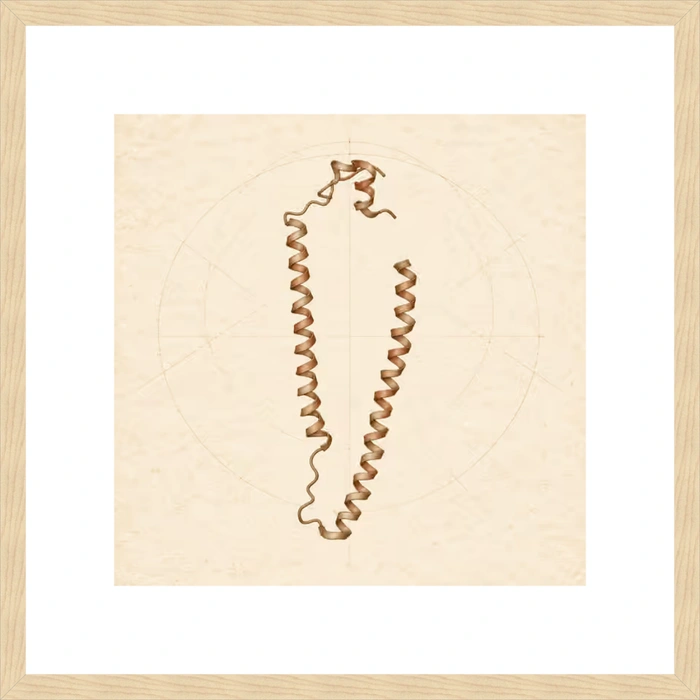
Anatomical Study
Maple wood solid-wood frame · White mat · Medium 16 × 16 in artwork
An elongated, open form balances the group and keeps the right side visually light.
The story behind the art
Cardiac troponin I is part of the switch that lets heart muscle contract and relax with every beat. When heart muscle cells are injured, some troponin can enter the blood, which is why doctors measure it when evaluating a possible heart attack.
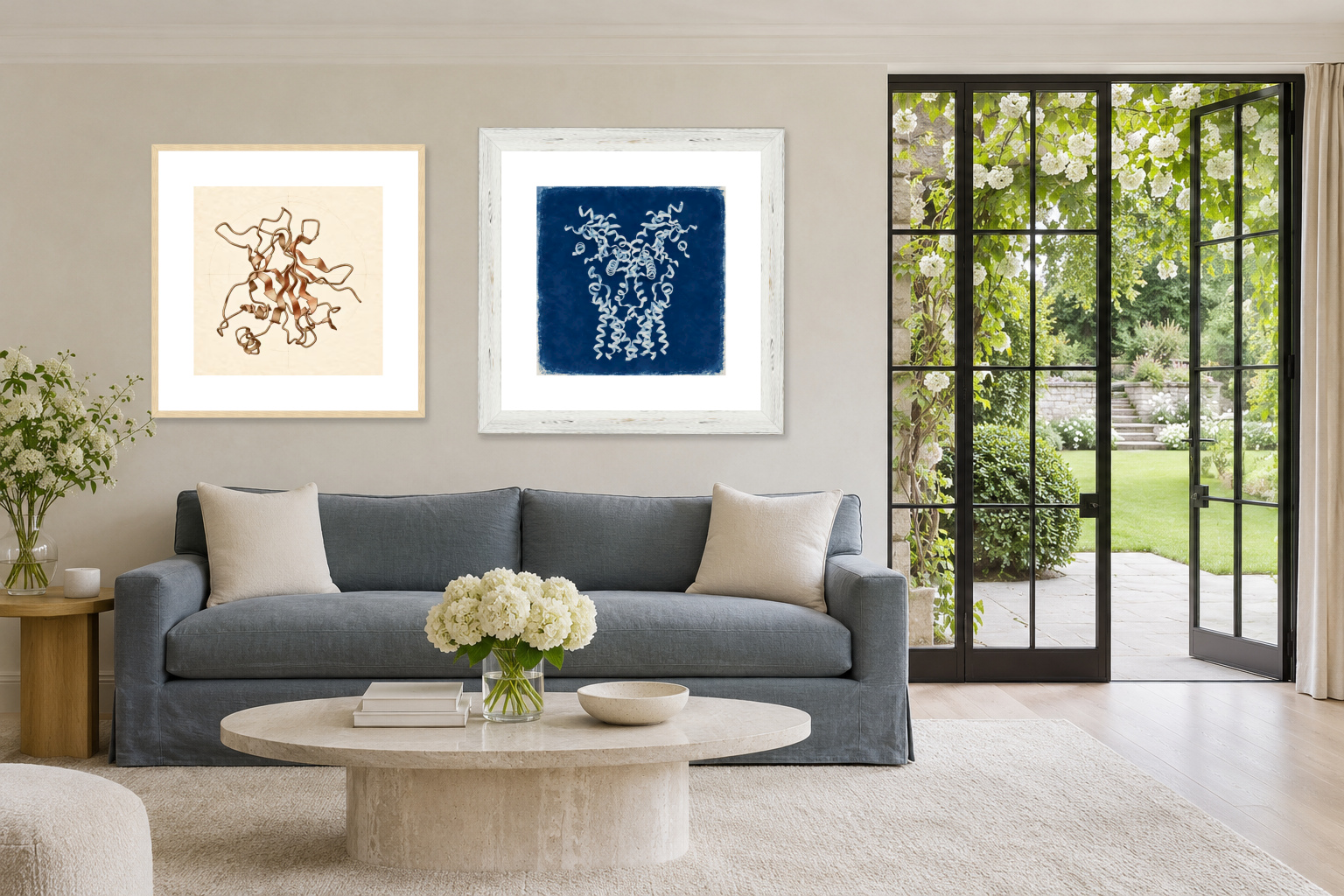
The garden family room
p53 and STING bring two distinct molecular forms to a garden-facing family room. A warm parchment study balances a blue work that connects with the sofa.
Anatomical Study + Prussian Blue · Large
p53 · Anatomical Study · Large
STING · Prussian Blue · Large
View room largerInterior visualization. Scale is approximate.
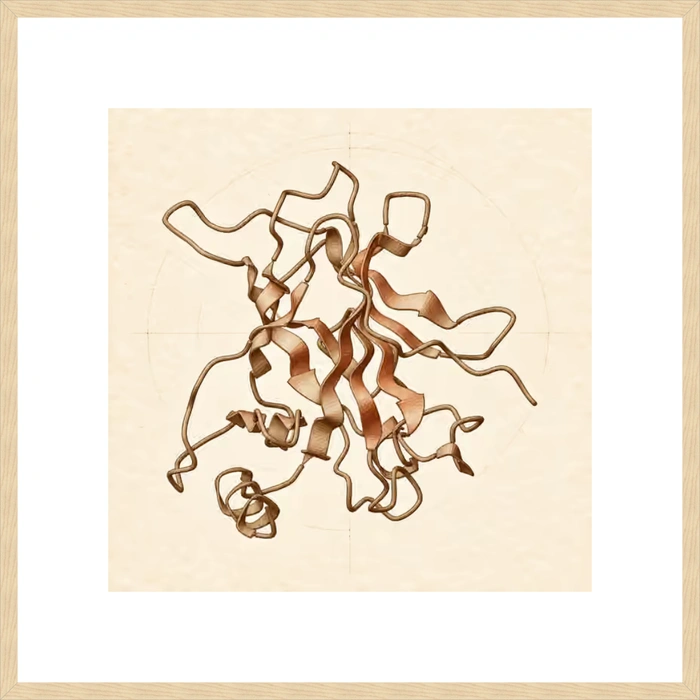
Anatomical Study
Maple wood solid-wood frame · White mat · Large 24 × 24 in artwork
The open loops and slender maple frame soften the grouping beside the garden.
The story behind the art
p53 is a cellular safety inspector: when DNA is damaged, it can pause cell division while the damage is repaired or tell a badly damaged cell to die. Its nickname, 'guardian of the genome,' captures why it matters in cancer research.
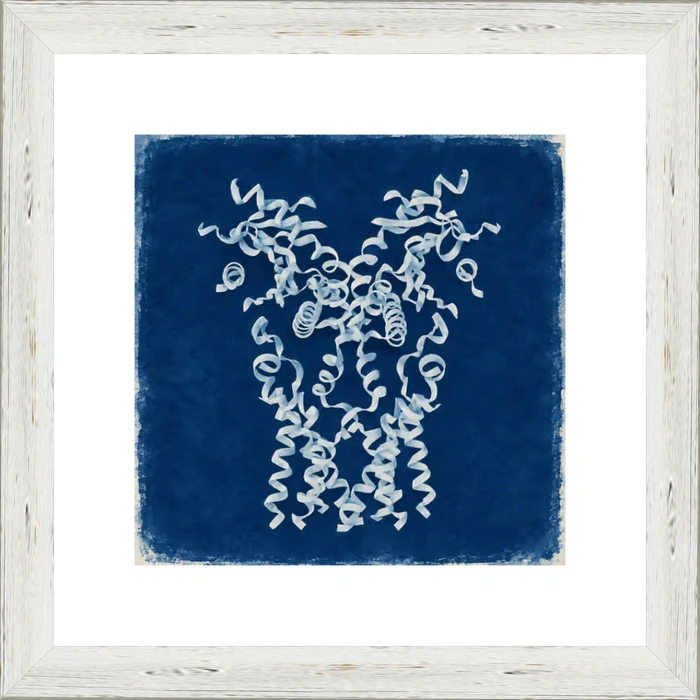
Prussian Blue
White solid-wood frame · White mat · Large 24 × 24 in artwork
A broad, branching silhouette and deep blue field give the room one strong blue anchor.
The story behind the art
STING is an alarm relay inside cells. When another protein finds DNA in the wrong place, STING helps broadcast a warning that activates immune defenses. Researchers study this pathway in infection and cancer, where its effects can vary with context.
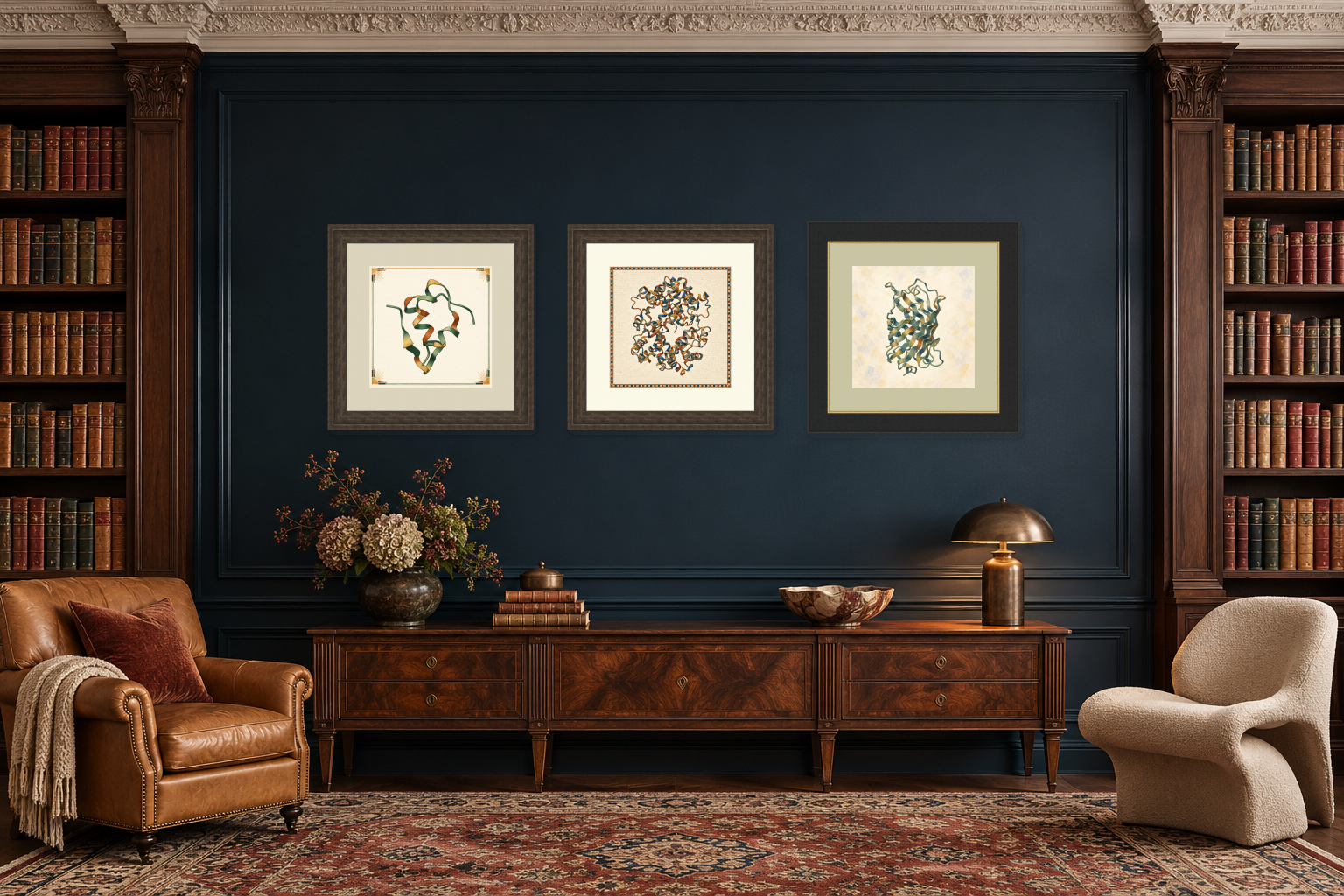
The blue-wall library
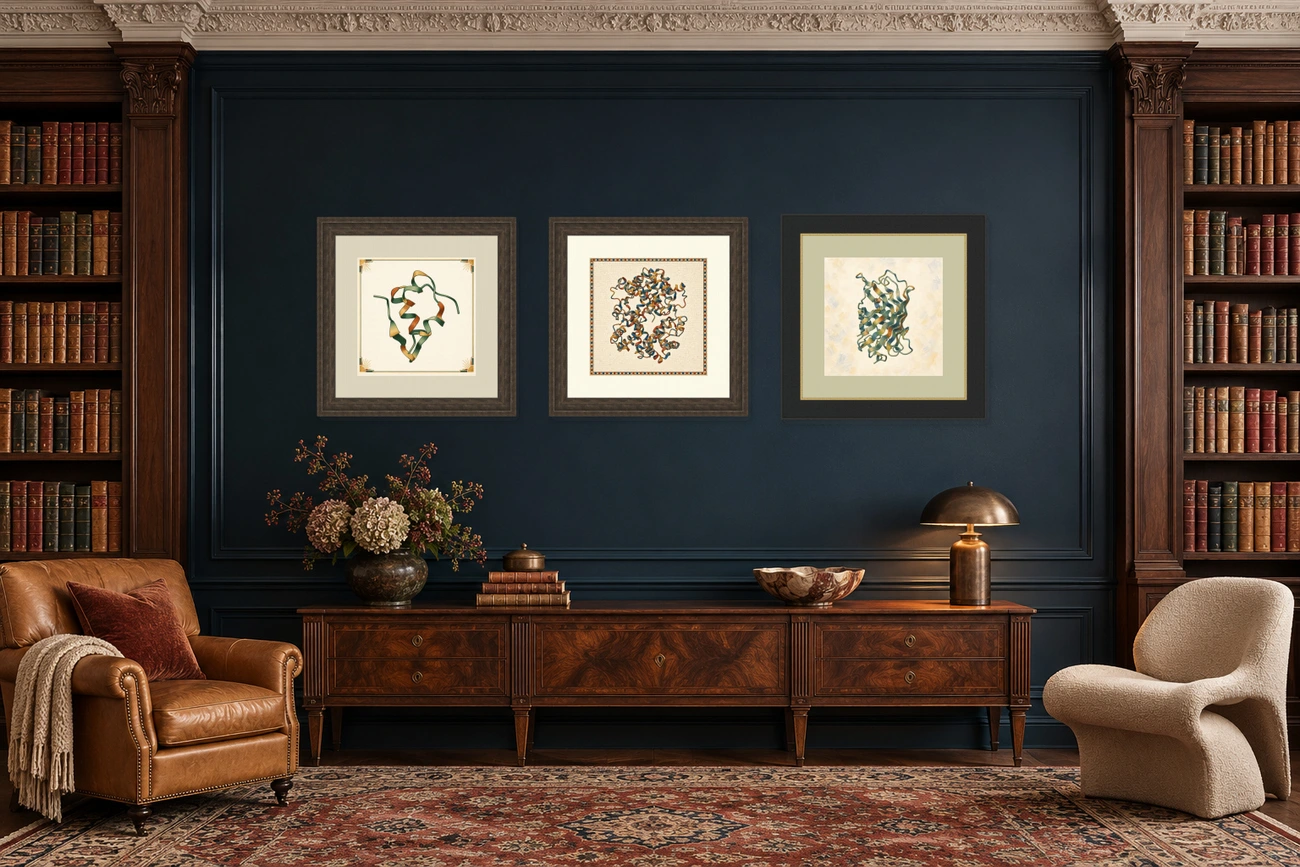
Insulin, hemoglobin and green fluorescent protein each have a different silhouette and artistic treatment. Cream grounds and dark frames tie the group to the blue wall and walnut shelves.
Gilded Grove + Tessera + Painted Light · Medium
Insulin · Gilded Grove · Medium
Hemoglobin · Tessera · Medium
Green fluorescent protein · Painted Light · Medium
View room largerInterior visualization. Scale is approximate.
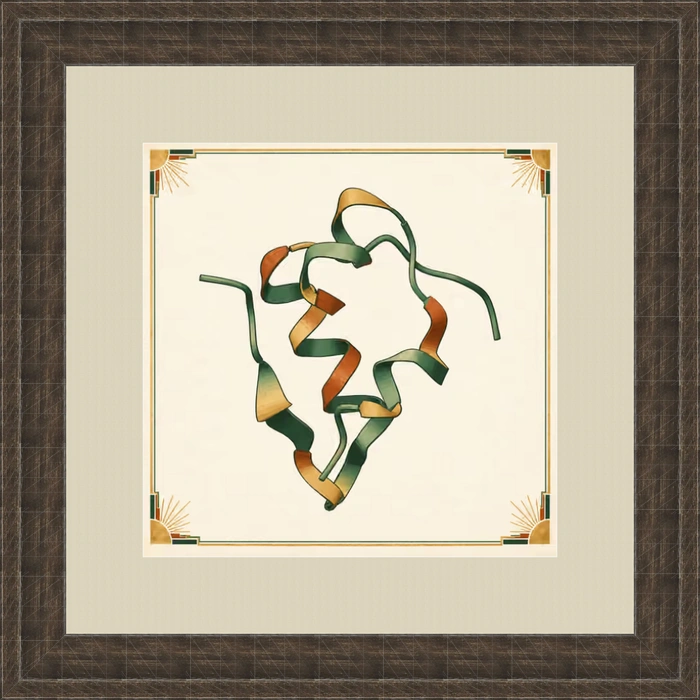
Gilded Grove
Espresso Gold solid-wood frame · Pearl mat · Medium 16 × 16 in artwork
An open form gives the three-piece grouping a quiet beginning.
The story behind the art
Insulin is a hormone that tells cells to take sugar from the bloodstream and use or store it. Its discovery made lifesaving treatment possible for people with type 1 diabetes and earned the 1923 Nobel Prize in Physiology or Medicine.
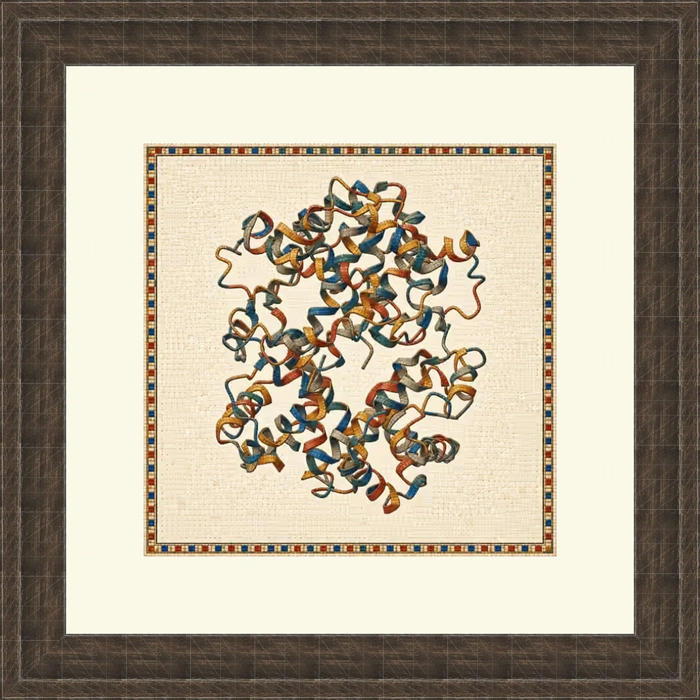
Tessera
Espresso Gold solid-wood frame · Off-White mat · Medium 16 × 16 in artwork
A compact, intricate structure adds a second visual rhythm.
The story behind the art
Hemoglobin is the oxygen carrier packed into red blood cells. It picks up oxygen in the lungs and delivers it around the body with every heartbeat. Max Perutz's work revealing its three-dimensional structure earned him a share of the 1962 Nobel Prize in Chemistry.
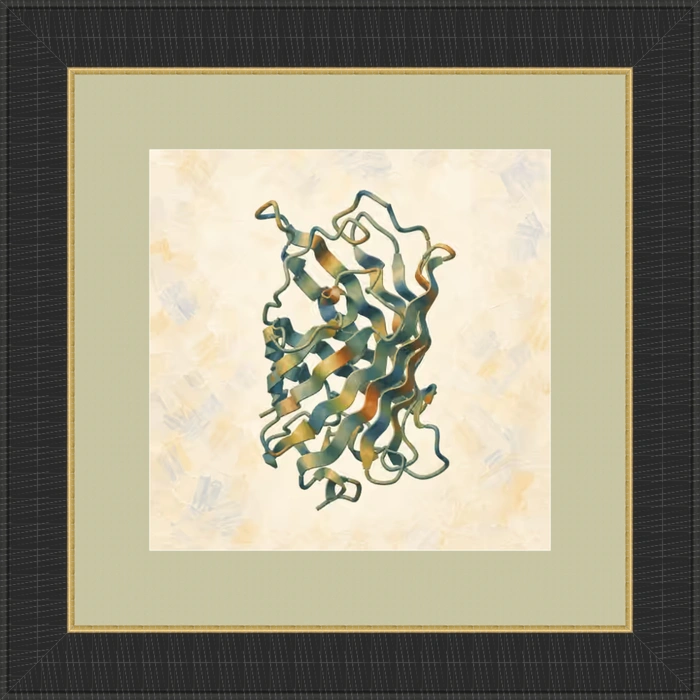
Painted Light
Black with Gold solid-wood frame · Sauterne mat · Medium 16 × 16 in artwork
A vertical barrel and softly painted ground complete the group with a different shape and surface.
The story behind the art
This jellyfish protein glows green when illuminated with blue light. Researchers use it as a tiny beacon, attaching it to other proteins to watch where they move inside living cells. Its discovery and development earned the 2008 Nobel Prize in Chemistry.
A substantial presence
Our largest artwork is 24 × 24 inches, surrounded by a generous mat. A wide solid-wood profile brings the whole composition to approximately 39 inches square in the white frame shown.
Large artwork plus mat measures 33 × 33 inches. Overall dimensions vary by frame profile. These illustrations use a common scale.