
Heart & blood
From carrying oxygen and forming a blood clot to coordinating a heartbeat, these proteins connect molecular structure with circulation.
52 proteins with artwork, each in twelve styles.
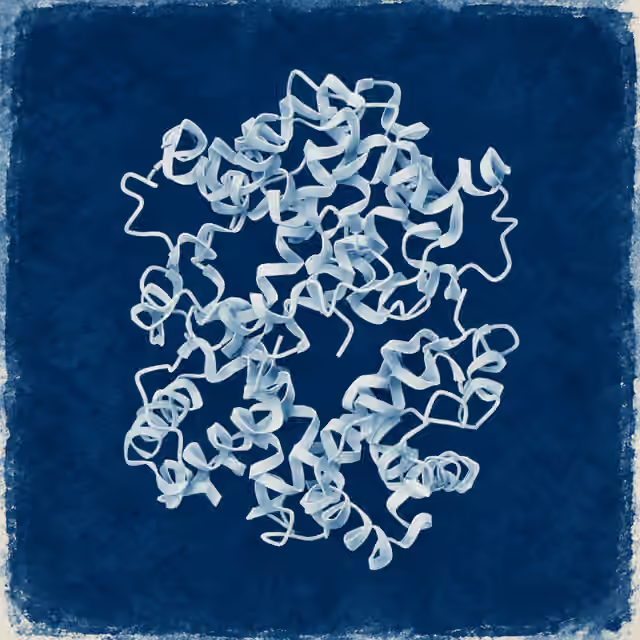
Explore the proteins
- Hemoglobin
- Beta-cardiac myosin heavy chain
- Prothrombin and thrombin
- Apolipoprotein E
- Angiotensin-converting enzyme 2
- HMG-CoA reductase
- Proprotein convertase PCSK9
- Low-density lipoprotein receptor
- Myoglobin
- Serum albumin
- Von Willebrand factor
- Angiotensin-converting enzyme
- Coagulation factor VIII
- hERG potassium channel
- Ryanodine receptor 2
- Cardiac sodium channel Nav1.5
- SERCA2 calcium pump
- Endothelial nitric oxide synthase
- Cardiac troponin I
- Coagulation factor X
- Cardiac troponin T
- Angiotensin II receptor type 1
- Tissue-type plasminogen activator
- Troponin C, slow skeletal and cardiac muscle
- Renin
- Potassium channel Kv7.1
- Atrial natriuretic peptide precursor
- Antithrombin
- Cardiac myosin-binding protein C
- Angiotensinogen
- Atrial natriuretic peptide receptor 1
- Phospholamban
- Coagulation factor IX
- Calmodulin-1
- Apolipoprotein A-I
- cAMP-dependent protein kinase catalytic subunit alpha
- Gap junction alpha-1 protein
- Voltage-dependent L-type calcium channel subunit alpha-1C
- Beta-2 adrenergic receptor
- Desmoglein-2
- Coagulation factor V
- Plasminogen activator inhibitor 1
- Hemoglobin subunit alpha
- Integrin beta-3
- Sodium channel regulatory subunit beta-1
- Caveolin-1
- Thrombomodulin
- Sodium/potassium-transporting ATPase subunit alpha-1
- Plasminogen
- Potassium voltage-gated channel subfamily E member 1
- High affinity cGMP-specific 3',5'-cyclic phosphodiesterase 9A
- Integrin alpha-IIb